Showing posts with label frog unit study. Show all posts

Friday, June 14, 2013

Frog Species Back from Extinction!

A species thought to be extinct as a result of habitat distruction in the 1950's,  has just been discovered in a pond in Israel. According to USA Today in their article Frog thought to be extinct found in Israel pond  we learn that the Hula painted frog has actually survived in a small pond. Scientists are now scrambling to study them as well as trying to find ways to help these amphibians multiply and eventually be taken off the endanged species list.

Wednesday, March 6, 2013

5th Annual Save the Frogs Day!

April 27th will mark the 5th year in a row that Save the Frogs celebrate the efforts around the world to save frogs from extinction. With pollution and diminishing habitat for frogs around the world, frogs face extinction on every continent. You can help by organizing an event in your community. Visit Save the Frogs for more information.

In the meantime, you can begin your own unit study about frogs so that the children you work with know as much about frogs as possible before the great even. You will find dozens of fun frog themed activities, frog unit study activities, frog math and so much more in articles I have written describing the ways I have taught my own children when homeschooling as well as classroom activities I have used when teaching in the classroom.

Have fun with frog songs, frog games and read about a Hunt for Frog Eggs.

Tuesday, December 21, 2010

Frog Spawn Place Value

Frog Themed Place Value Workjobs 


Photo Credit: Frog and Toad Eggs
on Flickr, Creative Commons.


Frogs lay their eggs in clusters and toads lay their eggs in strings.

To practice place value:

1. Lay out a sheet of blue paper (Pond Mathmat) Cut it down the middle. On one paper write frog eggs and on the other write toad eggs.

2. Roll dice of two different colors. The black die could be the ones and the green could be the tens.

3. Use White Reinforcement circles to show the number in clusters (Frog Spawn) or in strings of tens and ones (Toad Spawn)

4. Write the number in digits on the back of each one.

Later on these papers could be laminated and become a matching game with the answers on the back for self-checking.

This is adapted from an idea in Instructor , March, 2001 by Jacqueline Clarke .

More activities with a frog theme can be found at: The Frog Unit Study

Monday, December 20, 2010

Frogs are a popular Unit Study


Children love learning about animals and frogs are one of the more interesting wild animals that can easily be observed by children. In the Frog Unit Study, written by The Homeschool Club Co-Founder, Evelyn Saenz, children learn about frogs and all areas of the curriculum are addressed.

The games Swat the Verb Flies has children pretending to be frogs catching flies. Frogs only eat insects that are moving. By using fly swatters, the children swat at fly shaped cards which have words written on them. If the word is a verb, a word that shows motion, the children (Froglets) swat it.


The games and activities in this Frog Unit Study are unique and original. Be sure to visit often for more frog themed activities all across the curriculum...

The Frog Writing Center

Writing Process

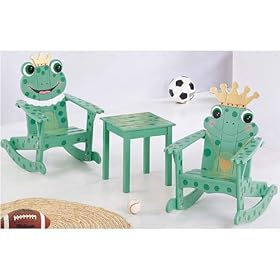
The green spotted table and frog chairs inspire young frogs to write their life histories.

Provide plenty of paper, pencils, and frogs to observe. Novelty pens that are shaped like frogs or paper that is cut in a frog shape can also inspire writing.

Spend time writing every day. Write in all curriculum areas and don't forget to publish the best writing so that everyone can be inspired to write more.

The more you write about frogs the more you will learn about frogs because writing requires observation, deep thinking and accuracy in expressing your thoughts.

From The Frog Unit Study: Hopping to Learn

Friday, January 22, 2010

The Frog Pond in Winter

Walking down to the Frog Pond in WinterIt's the middle of the winter and the frogs are all tucked in beneath a blanket of mud. The frog pond is frozen over and the children wonder if the frogs could be frozen as well. Some children believe that the ice goes all the way to the bottom. Some believe that ice forms at the bottom of the pond first. Others believe that ice forms on top first. We decide to do an experiment.

1. Fill a clear shallow dish with water and place it in the freezer.
2. Set a timer to check it ever 1/2 hour. Check to see if it is starting to freeze. If so where is it starting to freeze?
3. I made a paper with an outline drawing of the bowl and a place to record the time when checked.

We discovered that ice formed around the edge first. We then noted that the ice covered the top of the water before it finally froze on the bottom. Would that be true of the frog pond?

We then decided to go down to the frog pond to check the ice there.

NOTE: I went over the safety rules for going out onto ice covered ponds.

We used a crowbar to make a hole in the ice. We discovered that the ice was 12 inches thick but that the water was not frozen below that.

The Story of Bremer Pond is an article about caring for fish in a pond during the winter. The children loved listening to the article and had many questions as well as suggestions for scientific experiments.

Be sure to check out lots more frog related activities from our Frog Unit Study.

When we came back from the pond each day, the children would write letters or notes to their penpals about their discoveries. Writing about their discoveries gives the children a purpose for writing. Receiving responses to their letters creates motivation for more observation and discovery.

Be sure to check out the new Frog Stamps on Zazzle.


Disclosure: I earn money from the sale of items on this page


create & buy custom products at Zazzle

Wednesday, October 1, 2008

Hands-on Learning


There are so many things for a young child to learn in school. Children come with eager faces all ready to learn how to read, count and discover the world. Those activities don't have to be separated into separate subjects. In fact when we embark on a new unit of study I like to brainstorm all the things we know about a subject, gather materials, games and activities, write down ideas and ask for suggestions from children, parents and librarians. By bringing the community together everyone is involved in the learning process. I try utilize activities that address all the Multiple Intelligences.


When I began my research for my
Frog Unit Study, the children asked to have a frog in the classroom. Someone had an aquarium. Johnny's uncle had raised frogs from eggs and might be willing to come in and talk with the class about the experience. The librarian knew of lots of beginning readers both fiction like Frog and Toad but also non-fiction like Gail Gibbon's Frog Book.

Over the years I gathered games from yard sales, thrift stores and donations. I have been lucky to have some dedicated parents and grandparents come in to help make http://www.squidoo.com/edugames, workjobs, charts and class books.

The children I have taught as well as their parents have loved this way of learning and I hope that more teachers will find ways to make their classroom come alive with games, pets, plants, sensory tables and cuddly reading nooks.

Recently I discovered wordwalls as a way to help children write and learn to spell more independently. I combine such new methods with old fun ones like writing spelling words in salt trays or with paint brushes and water.